St Andrews, the Home of Golf
The home of golf is a small grey town of ruins, gowns, and greens an hour and a bit from Edinburgh. On most Sundays the Old Course closes to golf and opens to everyone — which is the day to come.
The short version
- Trains run Edinburgh Waverley to Leuchars in about an hour (Aberdeen line, frequent), with the 99 bus meeting the station for the ten-minute run into St Andrews — rail times at scotrail.co.uk.
- The Old Course sits on public links land, and on most Sundays play stops and the fairways open to walkers — the Swilcan Bridge photo, the Road Hole’s contours, and the 18th’s amphitheater all free underfoot; course and ballot information at standrews.com.
- Playing the Old Course is its own campaign — advance reservations and the daily ballot roughly 48 hours out, handicap certificates included — which day-trippers correctly file under ‘different trip,’ per the alarm.
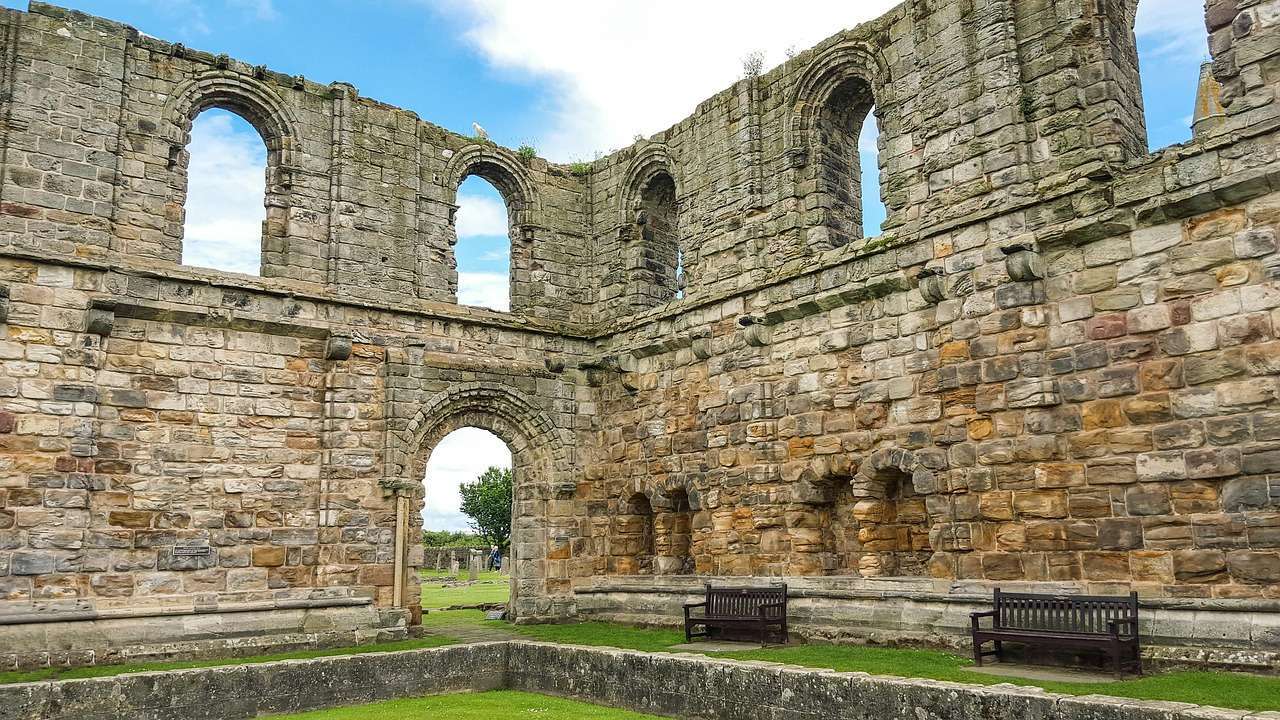
- The cathedral ruins — once Scotland’s largest building — stand gaunt over the harbor with St Rule’s Tower’s climb for the town-and-sea panorama; the castle ruins add the bottle dungeon and siege-mine tunnel down the shore.
- Scotland’s oldest university (1413) threads the town — quads, red gowns on pier walks, and the modern royal-romance footnote its tour guides deploy on schedule.
- West Sands runs two flat miles of the beach Chariots of Fire made famous — the town’s free finale, tide permitting, with the R&A clubhouse watching from the dunes.

Getting there
Waverley’s Aberdeen-line departures make Leuchars an easy hour; the 99 waits outside with small-town reliability and drops you at the bus station three minutes from everything. The connection’s rhythm is the only logistics the day contains. Drivers do it in ninety minutes and park at the links or leisure-centre lots; the golf traffic peaks with tee times, not tourists. Sunday’s course-walk window, per the alarm, is the calendar’s one strategic fact — championship weeks and select Sundays except themselves, so a glance at the links calendar before a golf-motivated visit is cheap insurance.
The day
Sunday version: the Old Course first while the light is long — out the first fairway, the Swilcan Bridge’s two-second photo queue, the loop’s famous contours read on foot, dog-walkers and pilgrims sharing the world’s most exclusive public park. Then the town: the R&A frontage and the golf museum for the history, coffee on Market Street, the cathedral ruins and St Rule’s climb, the castle’s dungeon and mine, and the pier walk the students take in gowns on Sundays — the town’s oldest choreography. Lunch runs fish-and-chips of championship standing or the harbour’s crab shack in season. West Sands closes the day at beach pace, the R&A silhouetted behind. Non-Sunday version: identical minus the fairways, with the course watched from the fence lines and the museum carrying the golf weight — still a full and handsome day.
When to go
May through September gives the long light, the beach, and the town at full voice; the student term paints it red-gowned from autumn. Championship summers (the Open’s returns) transform everything — electric to attend, impossible to improvise. Winter is grey-stone moody with the ruins at their gauntest and the course walks windswept but real. Sundays remain the standing recommendation for the fairway walk; the alarm already made the case.
Frequently Asked Questions
Can anyone really just walk the Old Course?
On most Sundays, yes — the links are public land and the course rests, welcoming walkers on the fairways (greens respected, events excepted). It’s among sport’s strangest and best free experiences: the world’s most coveted turf, open like a village common.
What’s the honest path to actually playing it?
Advance applications when windows open, the daily ballot about two days ahead (handicap limits apply), or singles queueing at dawn for gaps. Success is real but never promised — hence the alarm’s ‘different trip.’ The New, Jubilee, and Castle courses book far more mercifully.
Is there enough here for non-golfers?
Comfortably — ruins, university, castle, two beaches, and a working small town make the day without a single golf thought. Mixed groups split naturally: fairway pilgrims and ruin climbers reconvene for chips.
What happened to the cathedral?
The Reformation happened — Scotland’s greatest church lost its relics, patronage, and roof within a generation after 1559, and the town quarried the remains. The surviving gable and tower sketch the scale; St Rule’s climb explains the harbor town in one view.
St Andrews or Stirling from Edinburgh?
Stirling (documented on this network) for castle-and-battlefield history at full volume; St Andrews for golf, gowns, and coastal ruins at gentler pitch. History’s blockbuster versus history’s seminar — both an easy hour-ish out.