North Berwick and the Bass Rock
Thirty-five minutes by train, the show sits offshore: Bass Rock holds some 150,000 gannets in season, and the white you see on it is birds, not stone. The Law’s half-hour climb frames the whole Forth.
The short version
- ScotRail runs Edinburgh Waverley to North Berwick in about 35 minutes at commuter fares and frequency — scotrail.co.uk — with the harbour, beaches, and Seabird Centre ten minutes’ walk from the platform.
- Bass Rock is the headline per the alarm: the world’s largest northern gannet colony, some 150,000 birds at the season’s height, turning the volcanic plug white from March’s arrivals to autumn’s departure — a spectacle visible from the beach and overwhelming from the water.
- The Scottish Seabird Centre on the harbour runs the interactive cameras trained on the Bass and the islands — puffins on Craigleith in their weeks — plus the seasonal boat trips, from harbour catamarans circling the Rock to landing trips for the committed, booked ahead in season.
- North Berwick Law — the conical volcanic hill behind town — climbs in a steady half hour to the whale-jawbone arch (a replica of the landmark bones that stood here for two centuries) and a panorama running the Forth, the Bass, and the Lammermuirs.
- Tantallon Castle — the great red curtain-wall ruin on its clifftop east of town, facing the Bass across the water — visits by bus or a coastal walk, ticketed through historicenvironment.scot.
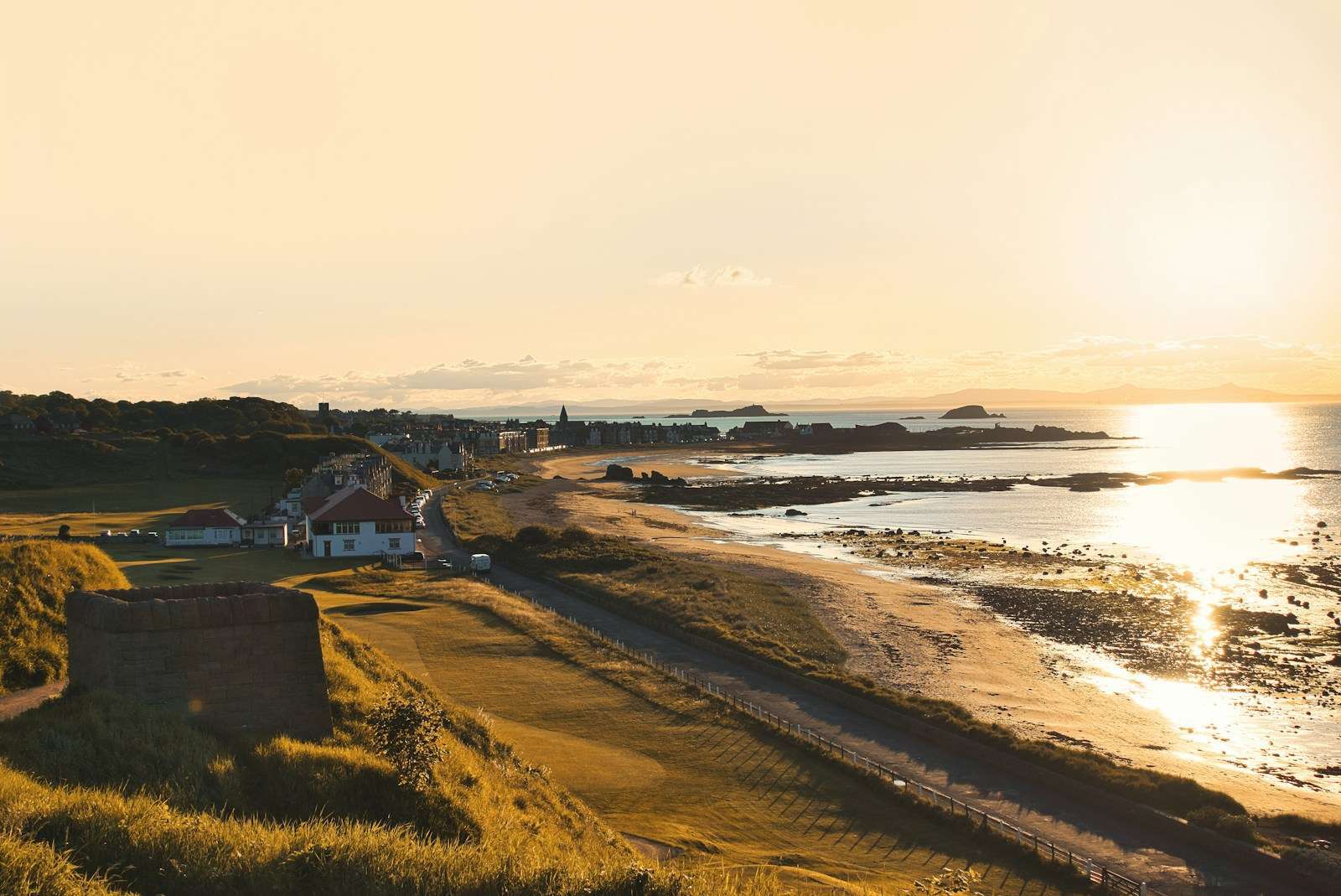
- The town itself runs two golden beaches, a working harbour with the seasonal lobster shack per the alarm’s lunch clause, golf links of pedigree, and a high street built for the interval between tides.

Getting there
The train’s frequency makes this Edinburgh’s easiest coast day — turn up, ride, walk to the water. The one booking worth making is the boat: the Bass trips run on season, weather, and demand, and the close pass under the colony is the day’s upgrade. Everything else — Law, beaches, castle bus — runs on arrival whim. Wind is the standing variable; the Forth supplies it generously, and layers beat optimism.
The day
Seabird Centre first for the orientation — the live cameras sort what’s happening on which island this week — then the boat if the schedule and sea agree: the approach to the Bass builds from white smudge to roaring city, gannets diving around the hull, the smell arriving before the noise finishes. Back ashore, the lobster shack per the alarm handles lunch when its season says so; the harbour wall and west beach handle the digestion. The afternoon climbs the Law — a steady grass-and-path half hour to the jawbone arch and the full-circle view — or buses east to Tantallon for the red ruin’s clifftop hour, the Bass framed in its windows as the castle’s permanent exhibition. The evening train home runs against the Forth’s long light, and nobody checks the time until Waverley.
When to go
April through September is gannet season — the colony at full white roar, the boats on full schedules, and puffin weeks (roughly May–July) adding Craigleith’s supporting cast. October’s departures still impress; winter strips the Rock to stone and the town to its beaches-and-golf bones, a valid quiet version with the Centre’s cameras carrying the wildlife. The lobster shack keeps warm-season hours per the alarm’s if-open clause; the Law and Tantallon run year-round with wind as the only gatekeeper.
Frequently Asked Questions
Can I land on Bass Rock?
Specialist landing trips run in limited season through the Seabird Centre’s programme — booked well ahead, sea-state dependent, and priced as the pilgrimage they are. The standard boat trips circle close beneath the colony without landing, which delivers the spectacle for most visitors; the cameras cover the rest.
What’s the story with the whale jawbone?
A whale’s jawbone arch stood on the Law’s summit for some two centuries — a landmark for sailors and townsfolk — replaced as the bones weathered, and since 2008 represented by a fibreglass replica holding the silhouette. The climb’s reward is the panorama; the arch is the handshake at the top.
Is the Law climb hard?
A steady half hour on grass paths and steps — proper shoes and modest legs cover it, and children treat it as a race. The summit adds wartime lookout ruins and the full Forth spread. Wind at the top routinely doubles the sea-level forecast; hold the hats.
Is Tantallon worth the extra leg?
For castle people, absolutely — the last great medieval curtain-wall fortress built in Scotland, dramatic red sandstone on a sheer coast, with the Bass composed in its arrow-slits. The bus makes it a 90-minute add; the coastal walk makes it an afternoon. Its siege history (Cromwell’s guns ended it) reads on the stones.
North Berwick or St Andrews from Edinburgh?
St Andrews (documented on this network) for the Old Course walk, ruins, and university texture at an hour-plus; North Berwick for seabirds, beaches, and the shortest ride to a real coast day. Golf pilgrims north across the Forth; bird people and families stay on this shore.