The Kelpies and the Falkirk Wheel
The Kelpies stand thirty meters tall, the Falkirk Wheel lifts boats like a fairground ride, and both are half an hour from Waverley.
The short version
- Trains run from Edinburgh Waverley and Haymarket to Falkirk several times an hour, about 25–30 minutes — times at scotrail.co.uk. Falkirk Grahamston station is the handier stop for the town and the Kelpies; Falkirk High sits on the ridge nearer the Wheel.
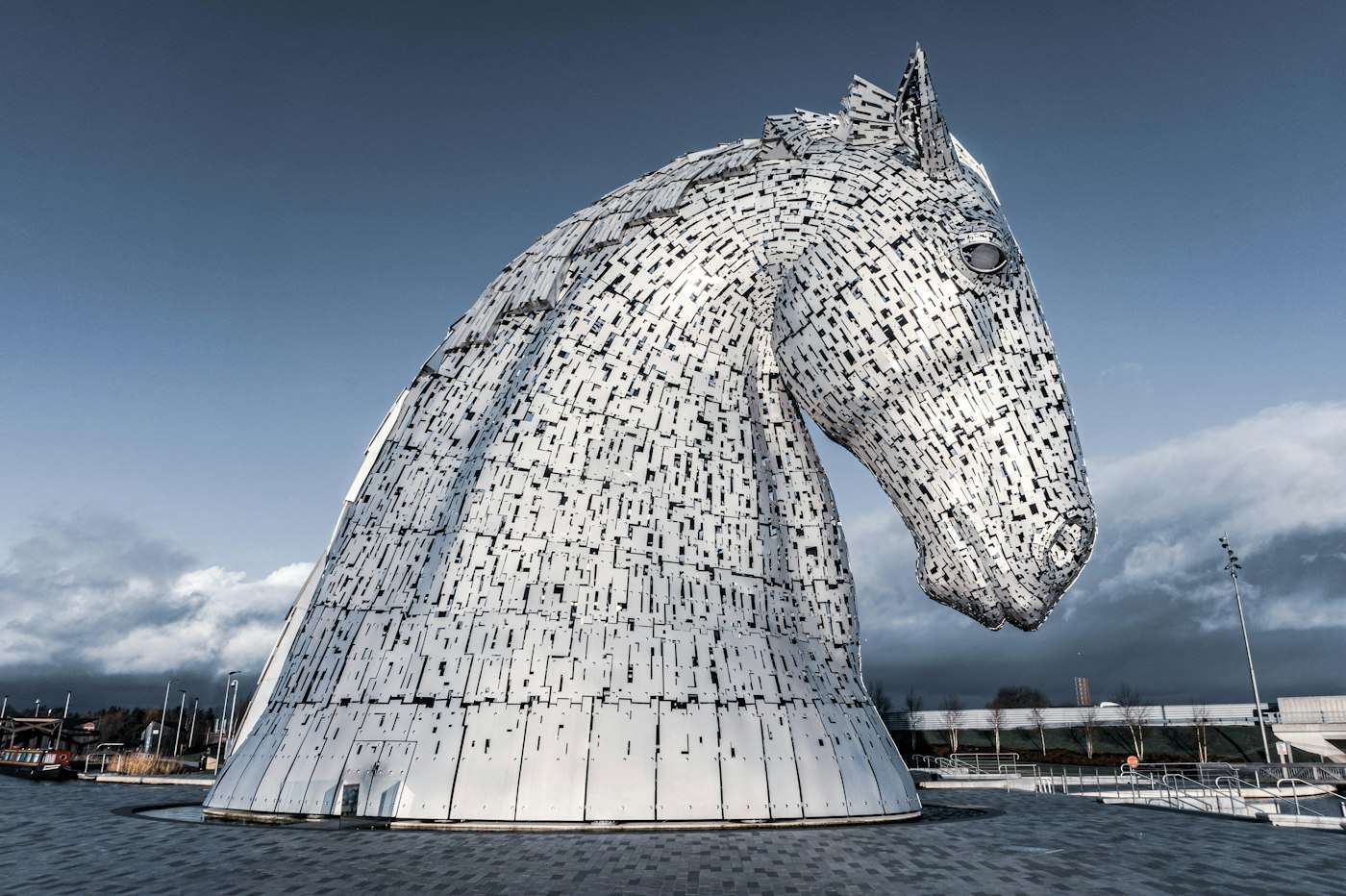
- The Kelpies — two stainless-steel horse heads, thirty meters tall — stand in the Helix park and cost nothing to visit at any hour. Guided tours go inside one head to see the skeleton of steel.
- The Falkirk Wheel is the world’s only rotating boat lift: it swaps boats between two canals in one slow, silent turn, replacing a ladder of eleven locks. Boat trips ride the wheel up and back — book at scottishcanals.co.uk.
- The two sites sit at opposite ends of town, linked by a flat canal towpath — a fine hour-plus walk or an easy taxi hop. Doing both in a day is the point; doing them on foot is the pleasure.
- Rough Castle, one of the best-preserved forts on the Antonine Wall — Rome’s short-lived northern frontier, now a UNESCO site — hides in the woods a short walk from the Wheel, free and usually empty.

Getting there
ScotRail trains leave Edinburgh Waverley and Haymarket for Falkirk several times an hour on the Glasgow lines; the ride takes 25 to 30 minutes. Falkirk Grahamston station puts you in the town centre, with the Helix and the Kelpies a half-hour walk or short bus or taxi ride east. Falkirk High, on the express line, sits above town nearer the canal for the Wheel. Drivers take the M9 in about 40 minutes; both sites have parking, and the towpath links them for anyone leaving the car at one end.
The day
Start with the Kelpies while the light is low — Andy Scott’s horse heads, each thirty meters of plated stainless steel, honor the working horses that hauled Scotland’s canal boats and plough teams, and they read differently from every angle. The Helix park around them is open lawns, wetland paths, and a visitor centre with the tour times. Walk or ride west along the canal to the Falkirk Wheel and take the boat trip: the gondolas hold the boats level while the whole structure rotates, a piece of engineering that replaced eleven locks and turns on the energy it takes to boil a few kettles, as the guides like to say. Before the return train, the ten-minute woodland walk from the Wheel to Rough Castle puts you on the Antonine Wall’s turf ramparts — the line where the Roman Empire decided Scotland was more trouble than it was worth. Callendar House, back in town, adds a free Georgian mansion with costumed kitchens for anyone with an hour spare.
When to go
April through October for the boat trips and the towpath; the Kelpies themselves work in any weather and are floodlit after dark, which makes a winter late-afternoon visit its own reward. Summer weekends bring families to the Helix in numbers — the park absorbs them, but Wheel sailings sell through, so midweek gives more slack. The towpath walk asks only that it isn’t horizontal rain.
Frequently Asked Questions
How do you get to Falkirk from Edinburgh?
Train from Waverley or Haymarket, 25 to 30 minutes, several times an hour. Falkirk Grahamston is closer to the town and the Kelpies; Falkirk High is the express stop nearer the Wheel side.
Do the Kelpies cost anything?
No — they stand in the free, always-open Helix park, floodlit at night. The paid extra is the guided tour that goes inside one of the heads to see the steel frame.
What is special about the Falkirk Wheel?
It is the world’s only rotating boat lift, opened in 2002 to reconnect the Forth & Clyde and Union canals, replacing eleven locks with one five-minute rotation. Visitor boat trips ride the wheel up, sail the aqueduct, and come back down.
Can you do the Kelpies and the Wheel in one day?
Comfortably — they anchor opposite ends of town, linked by a flat canal towpath of about an hour and a quarter on foot, or ten minutes by taxi. Kelpies in the morning, Wheel sailing in the afternoon is the natural order.
What is the Antonine Wall?
Rome’s turf-built northern frontier, thrown across Scotland’s narrow waist around AD 142 and abandoned within a generation. Rough Castle, a short walk from the Wheel, is its best-preserved fort — ditches and ramparts in open woodland, free to wander.