The Train to Linlithgow
Twenty minutes by train to the roofless palace where Mary, Queen of Scots was born — loch, fountain, and a discount for arriving by rail.
The short version
- ScotRail runs Edinburgh to Linlithgow in about 20 minutes, several trains an hour from Waverley and Haymarket — times at scotrail.co.uk — and the palace gates stand a ten-minute walk up from the station.
- Keep that train ticket: Historic Environment Scotland cuts 25% off palace admission for car-free arrivals who show one at the desk. Standard entry runs £10 booked online, open daily year-round — details at historicenvironment.scot.
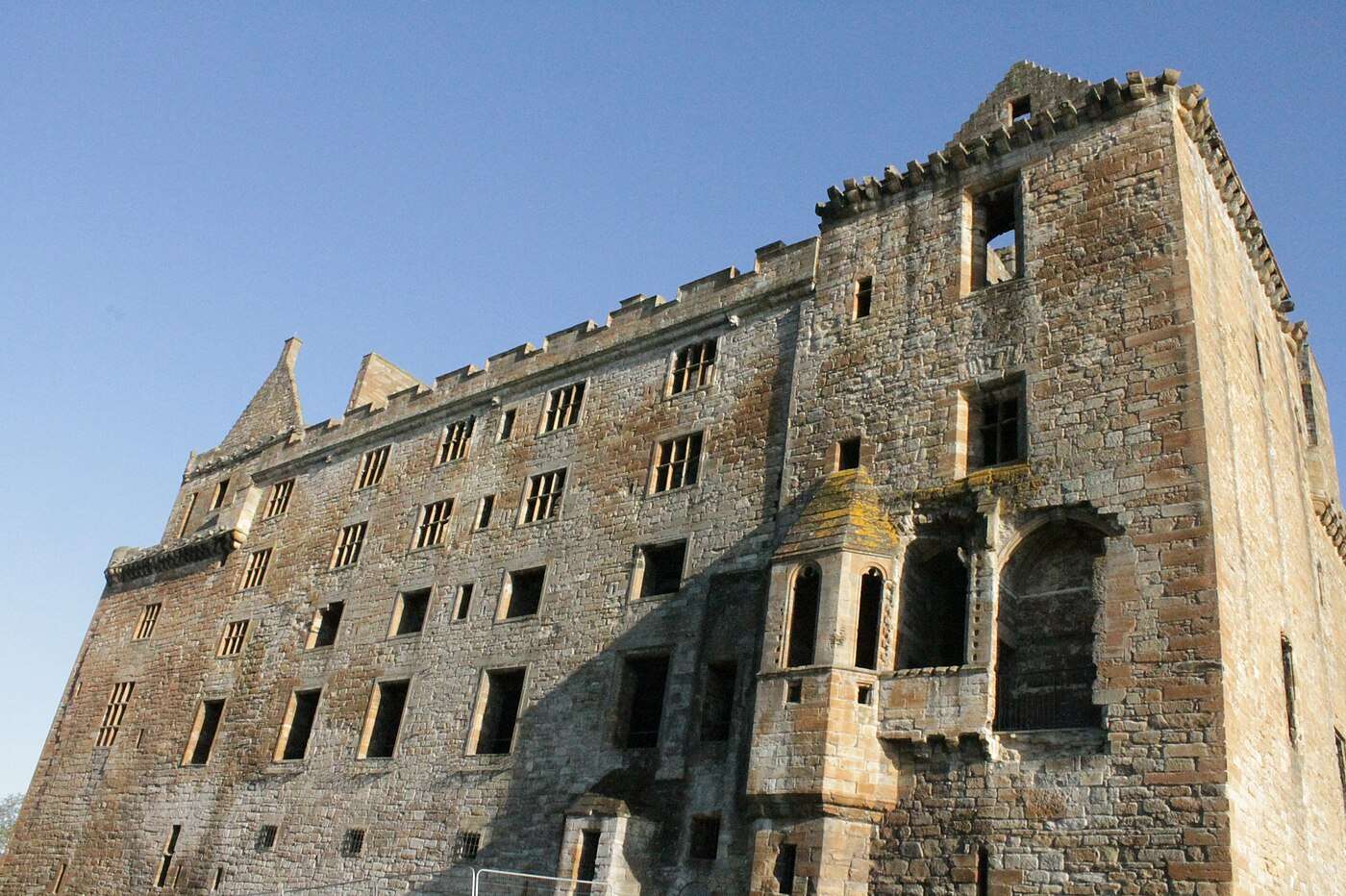
- The palace is the great roofless shell of the Stewarts’ pleasure house — Mary, Queen of Scots was born here in December 1542 and was queen within the week — gutted by fire in 1746 and left magnificent: a full square of towers, halls, and spiral stairs open to the sky.
- James V’s 1538 courtyard fountain — a three-tier stone crown counted among the oldest fountains in Britain — anchors the quadrangle; conservation work keeps the North Range, the king’s bedchamber, and the court kitchen off-limits for now, and the rest more than carries the ticket.
- St Michael’s Parish Church next door — the infant queen’s baptism church by the standard account — wears its startling 1964 aluminium crown spire, and the loch below circles the palace on a flat two-and-a-half-mile path with swans supervising.

Getting there
Trains leave Waverley and Haymarket for Linlithgow several times an hour and take about 20 minutes — no booking needed, any off-peak ticket does. From the station, cross to the High Street and walk up the Kirkgate: church first, palace gates behind it, loch spreading below. Everything in town sits within ten minutes of the platform, which is the whole argument for the train — that, and the discount it unlocks at the palace desk.
The day
Take a mid-morning train and go straight up the Kirkgate to the palace. Give the shell two hours: the great hall’s giant fireplace, the 1538 fountain’s carved crown, the spiral stairs that corkscrew to wall-walk views over the loch — with the queen’s birth chamber story told where it happened. St Michael’s next door takes twenty minutes and one long look at that aluminium spire, defended locally since 1964 with varying conviction. Lunch on the High Street — pubs and bakeries at town prices — then the loch circuit: flat, bird-loud, and built for the best palace photographs on the far bank. The Union Canal basin south of town runs weekend boat trips in season for whatever afternoon remains, and trains home run into the evening.
When to go
April through September for the loch walk in kind weather and the long light on red-gold stone — the palace opens daily year-round, shifting to shorter winter hours. Summer weekends bring jousting and history events to the peel; winter gives you the shell nearly alone, which suits it. The fountain’s carvings read best in low morning or evening sun whatever the month.
Frequently Asked Questions
How do you get from Edinburgh to Linlithgow?
ScotRail from Waverley or Haymarket, about 20 minutes, several times an hour — the palace is a ten-minute walk from the station. Showing your train ticket at the palace desk takes 25% off admission.
What happened to the palace roof?
Fire — in 1746, while government troops were quartered there after Culloden. The palace was never rebuilt, which preserved it as a complete Renaissance shell: every wall and stair standing, every ceiling sky.
Was Mary, Queen of Scots really born here?
Yes — in December 1542, in the royal apartments overlooking the loch. Her father, James V, died days later and the infant became queen before she left the building’s story. The baptism followed at St Michael’s next door by the standard account.
Is the whole palace open?
Most of it — conservation work currently keeps the North Range, the king’s bedchamber, and the court kitchen closed, and some high-level corners stay restricted while masonry repairs continue. The great hall, fountain courtyard, and tower stairs are open and carry the visit.
Is Linlithgow worth it versus Stirling Castle?
Different pleasures: Stirling is a furnished, garrisoned showpiece; Linlithgow is a bare, echoing shell you wander at your own pace for half the price and a third of the crowd. Train logistics favor Linlithgow — 20 minutes against the better part of an hour.