Edinburgh Day Tours
I’m Serious Day Tour Man AI, your day trip expert. Ask me anything — where to go, how to get there, and what’s actually worth your day.
Edinburgh’s most-sold day trip is the one this list talks you out of: the Isle of Skye in a single day is twelve-plus hours of coach around a fraction of an island that needs two, and the arithmetic below explains the better versions. The radius that fills a day well: a chapel so carved its guides need ninety minutes just for the highlights, the castle where Scotland’s story keeps its crown, and a seabird rock 150,000 gannets paint white every summer.
The city block covers the castle’s timed-ticket reality, the Royal Mile sorted honestly, and the August math that triples the city.
Here’s what’s worth a day, with real times and honest trade-offs.

Popular Day Trips

Isle of Skye
Skye in one day — the verdict

Rosslyn Chapel
The most carved church in Scotland, on timed sessions

Stirling
The castle that held the kingdom’s crossing

St Andrews
The home of golf — ruins, gowns, and greens

North Berwick
Bass Rock and its gannets, thirty-five minutes by train
The Skye Question — A Verdict
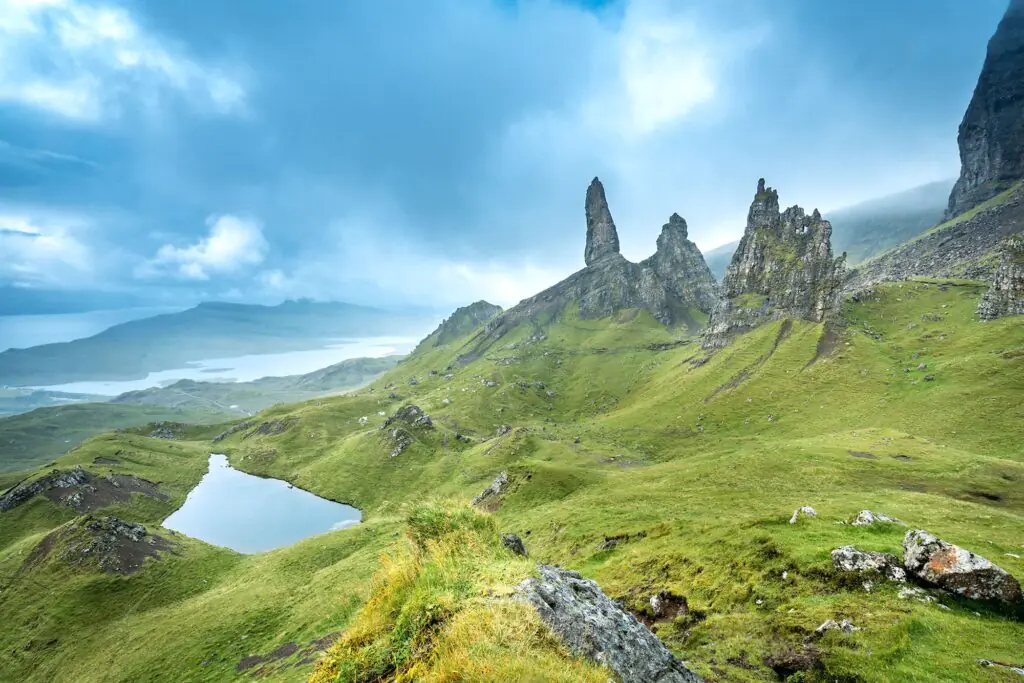
Skye sells harder from Edinburgh than any destination in Scotland, so the numbers go first: the island starts five-plus hours away, and the one-day coach tours run twelve to fourteen hours — most of them through a windscreen — for a photo stop at the Old Man of Storr’s car park, a glimpse of Kilt Rock, and lunch in Portree. The Highlands en route (Glencoe, the commando memorial, sometimes the Eilean Donan pause) do the actual entertaining. People take it daily; the reviews say “long” more than any other word; and the island’s whole argument — the light shifting on the Quiraing, the Fairy Pools without a queue, Talisker at its own pace — is for visitors who sleep there.
The honest alternatives: a two-day Skye tour or self-drive with a Portree or Broadford night is the honest minimum, and it transforms the trip. Travelers locked to one Edinburgh day who want Highland drama should take the Glencoe-and-Highlands day instead — three hours out, the glen itself the destination, Loch Ness optional and cheerfully overrated — or the West Highland Line’s rail version toward Fort William, which puts the scenery in panorama windows instead of coach glass.
For those going regardless: pick the small-group operators over the full coaches, sit left going out, expect Portree at maximum density at 1 p.m., and accept the day for what it is — a scouting trip that books your return.
Rosslyn Chapel & the Borders — Stone and Silence
Forty minutes south (the Lothian bus runs direct), Rosslyn Chapel compresses more carving per square meter than any building in Britain: the fifteenth-century Sinclair chapel whose every surface crawls with Green Men, angel musicians, biblical cycles, and the Apprentice Pillar with its murder legend attached — plus the maize-like carvings predating Columbus that keep the theorists employed. The Da Vinci Code fame has settled into steady pilgrimage, and the building outperforms the novel.
The mechanics: entry runs on 90-minute timeslots booked ahead on the chapel’s official site — each includes the expert talk that unlocks the carving program — with the 9 a.m. slot quietest before the mid-morning coaches; Sundays open at noon after the morning service, no photography is allowed inside (exteriors are fine), and Historic Scotland or National Trust memberships don’t apply here — the chapel is an independent trust. The Roslin Glen footpath to Rosslyn Castle’s ruin adds a free wooded hour from the chapel door.
The stack southward: the Border abbeys — Melrose (Robert the Bruce’s heart is buried here; the rugby town around it charms), Dryburgh’s romantic ruins with Walter Scott’s grave, Jedburgh’s great nave — string a driving day through the region the tours undersell. The frame: chapel-plus-glen is a half day; chapel-plus-abbeys is the full connoisseur’s version.
Read the full Rosslyn Chapel day-trip page.
Stirling, the Kelpies & the Wheel — The Braveheart Corridor
Fifty minutes northwest, Stirling Castle makes the case that it out-castles Edinburgh’s: the renaissance royal palace restored to painted-ceiling vividness (the recreated Stirling Heads glow overhead), the Great Hall’s golden harling visible for miles, and the battlements reading seven battlefields — Stirling Bridge and Bannockburn among them, the geography that made the town “the brooch that clasps Highlands and Lowlands.” Book online on Historic Environment Scotland’s site (the summer slots and the restricted car park both reward it), and take the costumed interpreters’ talks; they’re the castle’s best feature. The Wallace Monument across the valley adds the 246-step crown and the sword.
The Falkirk pair breaks the return journey: the Kelpies — thirty-meter steel horse heads over the canal basin, Scotland’s boldest public art, free to walk around at all hours and best at dusk when they light — and the Falkirk Wheel, the world’s only rotating boat lift, which replaced eleven locks with one slow-motion ferris turn; ride the boat trip through a rotation or watch from the amphitheater for nothing.
The frame: castle morning, Kelpies-and-Wheel afternoon, all of it train-and-bus workable — the region’s best engineering-and-history day, and the honest answer for travelers who want castles without Edinburgh’s queue density.
Read the full Stirling day-trip page.
St Andrews — Golf, Ruins & Gowns
Ninety minutes northeast (train to Leuchars plus the shuttle bus, or the direct coach), St Andrews layers three towns: the home of golf, the ruined ecclesiastical capital of medieval Scotland, and Scotland’s oldest university, red gowns and all.
The golf layer, sorted honestly: the Old Course is a public course — spectators walk the fringes freely, the Swilcan Bridge photo happens between groups (Sundays, when the course traditionally closes for play, open the fairways to walkers entirely — the local dog-walking on golf’s most famous turf is the town’s best flex), and playing it runs on the ballot and booking systems planned months out. The R&A museum handles the history for the devoted.
The ruins layer: the cathedral — once Scotland’s largest building, dismantled by the Reformation — keeps its gable and tower (St Rule’s climb reads the whole town), and the castle’s cliff-edge remains include the mine-and-countermine tunnels from the 1546 siege, crawlable and genuinely strange. The town layer: the three medieval streets, the pier walk students process down in red gowns on Sunday traditions, and the ice-cream institution queue that outlasts governments. West Sands — the Chariots of Fire beach — runs the finale. Full gentle day, and the East Neuk fishing villages (Crail, Anstruther’s fish bar) extend it for drivers.
Read the full St Andrews day-trip page.
North Berwick & the Bass Rock — The Gannet Coast
Thirty minutes east by train, North Berwick is the seaside town Edinburgh keeps for itself, and its offshore fact is world-class: the Bass Rock, the volcanic plug in the firth, hosts the world’s largest colony of northern gannets — 150,000 birds at summer peak, whitening the rock so completely it reads as snow — and the Scottish Seabird Centre runs the telescopes, the live cameras, and the seasonal boat trips that circle the rock through the diving squadrons (landing trips for photographers book far ahead; the catamaran circuits satisfy everyone else).
The town and coast: the beach-and-harbor front, the North Berwick Law’s short conical climb (whale-jawbone arch replica on top, the whole firth below), and Tantallon Castle ten minutes east — the great red curtain-wall ruin on its cliff, staring at the Bass across the water, among Scotland’s most dramatic castle frames. The lobster shack at the harbor settles lunch when it’s running.
The stack: Dirleton’s village-green castle and Yellowcraig beach fill the gentler hours; Dunbar extends the coast for John Muir pilgrims (his birthplace museum anchors the town that named the country’s coastal trail). The frame: this is the local’s exhale day — train out, birds and beach, fish tea, train home — and May through July is the gannet spectacle at full volume.
Read the full North Berwick day-trip page.
The Castle Slots, the Mile Truth & Edinburgh Itself
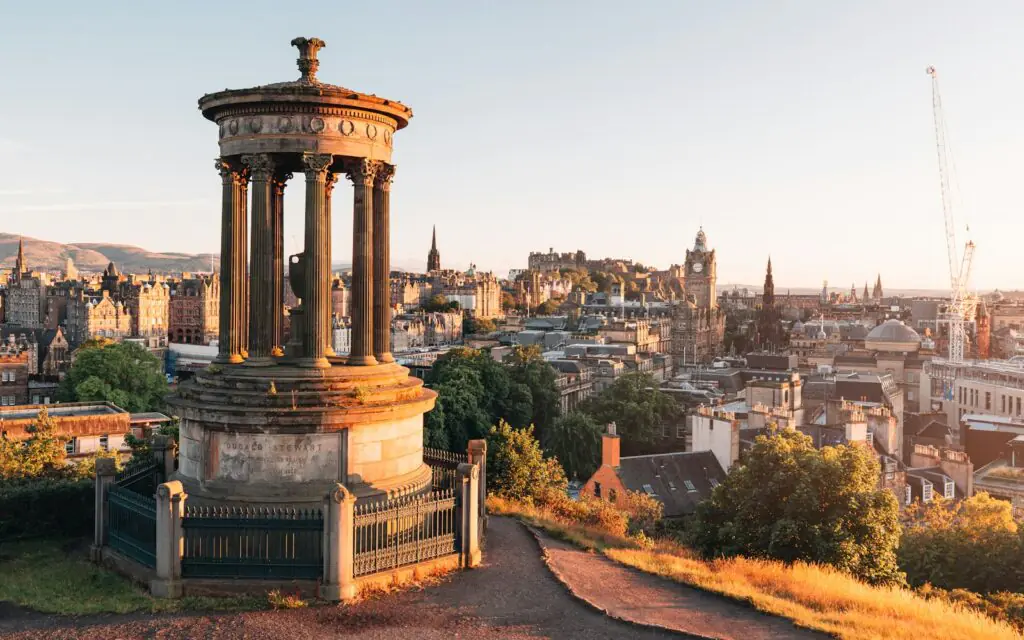
Edinburgh Castle, mechanically: timed tickets on Historic Environment Scotland’s official site sell out summer days entirely — book ahead, take the first slot (the esplanade at 9:30 is yours; by 11 it is everyone’s), and route Crown Jewels first, then the Stone of Destiny’s new framing, the war memorial’s hush, and Mons Meg. The One O’Clock Gun startles on schedule Monday through Saturday; position for it deliberately.
The Mile truth: the Royal Mile is a genuine medieval spine wearing a tartan-shop costume — the closes and wynds off it (Advocate’s, Dunbar’s, the real stairways) hold the atmosphere the main drag sells; St Giles’ thistle chapel takes ten minutes and rewards them; and the Holyrood end pairs the palace with the parliament’s architecture argument. Arthur’s Seat answers the city’s best-view question for the price of an hour’s climb — Salisbury Crags for the shorter version — and Calton Hill sells the skyline-with-castle photograph at a fraction of the effort.
The living city: the whisky sort runs from the Mile’s visitor experiences (fine first lessons) to the bars that matter — the Scotch Malt Whisky Society’s venues and the unpolished institutions where the list outnumbers the seats; ask for a region, not a brand, and let the bar teach. Eat one proper haggis (the neeps-and-tatties format, no apologies), the fish tea at the coast, and the morning roll square-sausage initiation. Season math: August triples the city — the festivals stack Fringe, International, Tattoo, and Book into one month of glory and surge pricing, booked far ahead or avoided knowingly; December’s Hogmanay runs the same arithmetic; and May–June and September offer the castle light without the crush. The wind is structural; the forecast is a suggestion; layers are the law.
Frequently Asked Questions
Is the Isle of Skye doable in a day from Edinburgh?
It runs — twelve to fourteen coach hours around brief photo stops — and it’s the trip this list talks you out of: Skye is an overnight trip and punishes the sprint. Take the two-day version, or spend one day on Glencoe and the Highlands instead, three hours closer.
How do you visit Rosslyn Chapel?
Book a 90-minute timeslot ahead on the chapel’s own site — the talk is included, the 9 a.m. slot beats the coaches, Sundays open at noon after the service, and no photography inside. Historic Scotland and National Trust cards don’t apply; the chapel is an independent trust.
Do you need to book Edinburgh Castle?
In season, absolutely — timed tickets on Historic Environment Scotland’s site sell out summer days. Take the first slot, see the Crown Jewels before the crowd compresses, and stand clear-ish of the One O’Clock Gun on purpose.
When can you see the Bass Rock gannets?
May through July is peak — 150,000 birds whitening the rock, with the Seabird Centre’s boat trips circling through the dive-bombing. North Berwick is thirty minutes by train; Tantallon Castle’s cliff-top ruin stares at the rock from shore.
Can you walk on the Old Course?
Yes — spectators walk the fringes any day, and on Sundays, when the course traditionally rests, the fairways open to walkers entirely. Playing it runs on ballots and bookings months out; the Swilcan Bridge photo just takes patience between groups.